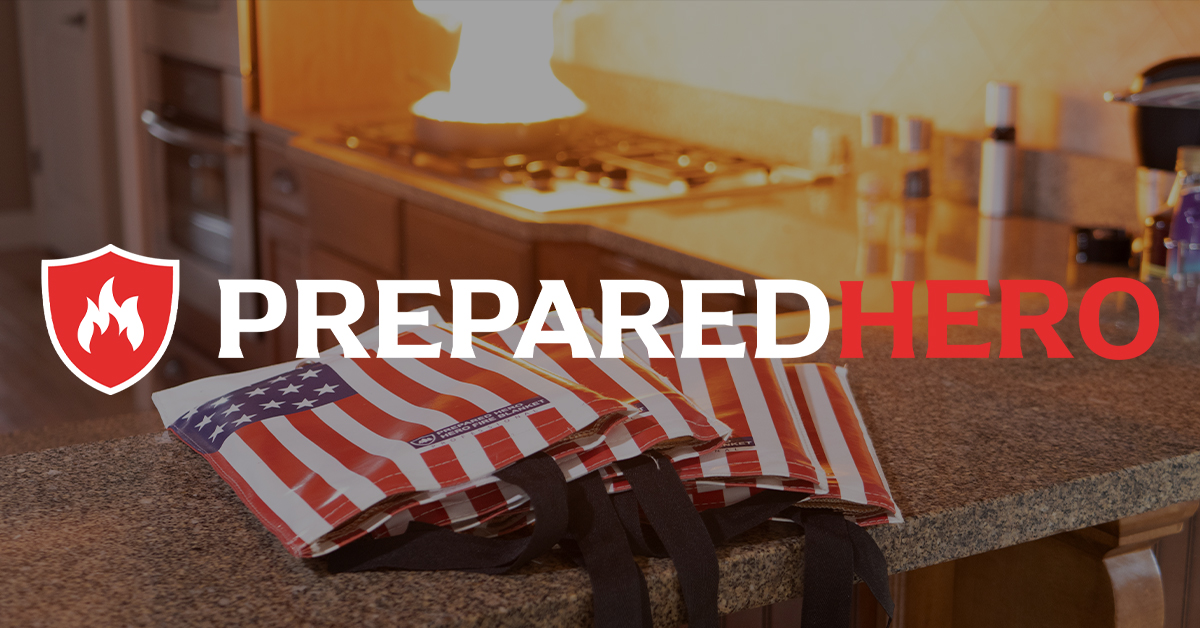
The fast answer
To put out a grease or electrical fire: never use water. Cut the heat or power source if it's safe to do so, then smother the flame completely — with a metal lid, a fire blanket, or a Class C extinguisher for electrical fires. Covering the fire cuts off its oxygen supply, which is what actually stops it, not the water most people reach for first.
A small, unattended flame can become unmanageable in under a minute. That's the entire case for keeping something faster than a fire extinguisher within reach — no training, no pin to pull, no aim required.
Rated to isolate temperatures up to 1,076°F (580°C). Built from two layers of woven fiberglass with an inner fire-retardant film, meeting CE safety standard EN 1896:1997. Averages 4.7 out of 5 across nearly 4,000 verified buyer reviews on major retailers.
What we tested
We handed a Prepared Hero Fire Blanket to a working fire captain and asked him to use it the way an untrained homeowner would: no walkthrough, no coaching, just the instructions printed on the packaging.
It smothered the test flame in under five seconds. Unlike a discharged fire extinguisher, there was no chemical mess to clean up afterward, and — unlike an extinguisher — it doesn't expire and never needs replacing on a schedule.
How it rates
What holds up
- Deploys in seconds under real stress
- No training or certification needed
- Works on grease, electrical, and stovetop fires
- Never expires, unlike an extinguisher
- Compact enough for a kitchen drawer
Worth knowing
- Only effective on small, contained flames
- Not a substitute for a working smoke detector
- Best treated as single-use once deployed on a real fire
As seen on Good Morning America
Frequently asked
How do you put out a grease fire?
Never use water — it will splatter burning oil and spread the flames. Turn off the heat if it's safe to reach, then smother the fire completely with a metal lid, a small amount of baking soda, or a fire blanket.
How do you put out an electrical fire?
Never use water — it conducts electricity and can cause shock or make things worse. If it's safe, cut power at the breaker or unplug the source, then smother the flame with a Class C extinguisher or a fire blanket.
Does a fire blanket expire?
No — unlike a fire extinguisher, it doesn't need periodic inspection or scheduled replacement. Just check it for damage after any use.